Cortisol and Fat Loss:
Why Stress, Hormones, and Weight-Loss Resistance May Be Blocking Your Results

If you're struggling with stubborn belly fat, weight-loss resistance, fatigue, cravings, or difficulty losing weight despite eating well and exercising, cortisol may be playing a bigger role than you realize.
Many people assume they simply need more discipline, stricter dieting, or harder workouts.
In reality, chronic stress and cortisol dysregulation are often overlooked contributors to hormonal weight gain, slow metabolism, and weight-loss resistance.
Others assume their hormones are to blame, but what many don't realize is that cortisol is one of the most important hormones influencing fat loss, metabolism, energy production, and weight-loss resistance.

Cortisol is often called the "stress hormone," but its effects go far beyond stress. It influences metabolism, fat storage, blood sugar regulation, energy production, sleep quality, and hormone balance.
Elevated cortisol has been strongly associated with increased visceral fat, the deeper abdominal fat linked to metabolic dysfunction.
Who This Article Is For
This Article Is Especially Relevant If:
✓ You have stubborn belly fat
✓ You feel exhausted despite sleeping
✓ You struggle with cravings
✓ Your weight loss has stalled
✓ You're interested in non-invasive fat loss
✓ You're considering body contouring
✓ You've been told your labs are "normal" but don't feel normal
In this article, you'll learn how cortisol affects fat loss, signs your cortisol may be out of balance, and practical steps you can take to support healthy cortisol levels naturally.
What Is Cortisol?
Signs Your Cortisol May Be Out of Balance
How Cortisol Affects Fat Loss
Why Cortisol Causes Belly Fat
The Cortisol-Energy Connection
How Zerona VZ8 Fits In (how-it-works link)
When to Consider Cortisol Testing
Frequently Asked Questions
Why You May Be Doing Everything Right and Still Not Losing Weight
If you’ve been putting in real effort—eating better, showing up to workouts, even investing in advanced treatments like Zerona—and your body still isn’t responding the way it should, it’s not random.
There’s a pattern to this.
And more often than not, that pattern leads back to one thing: cortisol.
Most people hear “stress hormone” and assume it only matters if they feel overwhelmed or anxious.
But cortisol doesn’t need you to feel stressed to impact your body. It responds to everything—your sleep, your blood sugar, your thoughts, even how your morning starts.
When it’s working with you, you feel energized, focused, and resilient.
When it’s not, your body starts holding on instead of letting go—especially when it comes to fat.
One of the most common things I hear from clients is:
"I feel like I'm doing everything right, but my body won't budge."
They're eating well. They're exercising. They're motivated.
Yet the scale won't move and the belly fat won't leave.
Often, cortisol and stress are part of the missing piece.
Can Cortisol Cause Weight Gain?
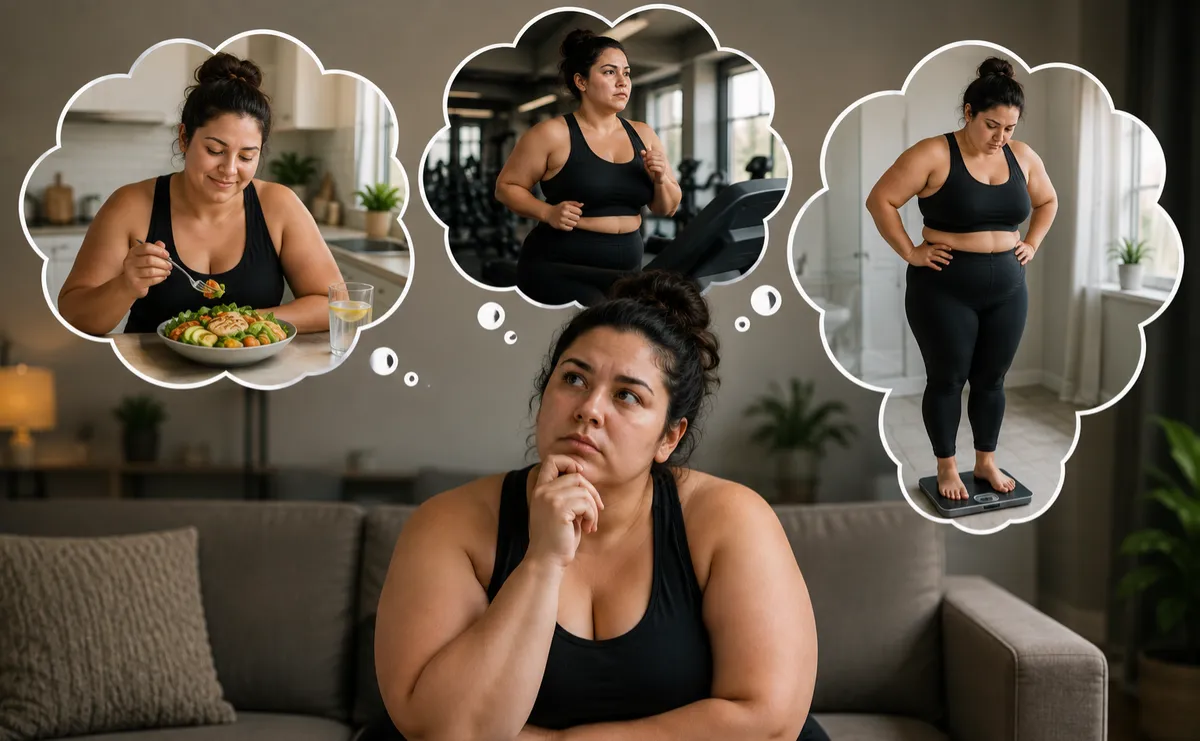
Yes. Chronically elevated cortisol can contribute to stubborn belly fat, increased cravings, fatigue, poor sleep, hormonal weight gain, and weight-loss resistance. While cortisol itself isn't "bad," an unhealthy cortisol rhythm can make fat loss significantly more difficult.
Can Cortisol Cause Weight-Loss Resistance?
Yes. Chronically elevated cortisol can contribute to stubborn belly fat, increased cravings, fatigue, poor sleep, hormonal weight gain, and weight-loss resistance. While cortisol itself isn't "bad," an unhealthy cortisol rhythm can make fat loss significantly more difficult.
What Are the Symptoms of High Cortisol?
Common symptoms of cortisol imbalance may include:

Stubborn belly fat

Weight-loss resistance

Hormonal weight gain

Fatigue

Brain fog

Sugar cravings

Difficulty sleeping
Stress intolerance

Low energy

Feeling "wired but tired"
Many people experiencing these symptoms assume they have a metabolism problem when cortisol imbalance may actually be contributing to the issue.
These are some of the most common questions people ask:
Why am I gaining weight around my stomach?
Why can't I lose belly fat?
Why am I always tired?
Why am I craving sugar all the time?
Why am I not losing weight despite dieting and exercising?
Why do I feel wired at night but exhausted during the day?
In many cases, cortisol imbalance may be contributing to these frustrating symptoms.
What Cortisol Actually Does in Your Body
Think of cortisol like your body’s built-in alarm system + energy manager.

It helps you wake up, respond to stress, and decide where your body should send energy.
You don’t need to fear cortisol.
You just need to understand how it works.
Cortisol is Made in Your “Stress Control Center”
Your body has tiny glands above your kidneys called adrenal glands.
They make cortisol.
But they don’t work alone.
They take instructions from your brain through something called the HPA axis.
Think of it like this:
Your brain is the boss
The HPA axis is the communication system
Your adrenal glands are the workers making cortisol
When stress shows up—or even when your sleep schedule is off—your brain sends a message:
“Hey, we need energy and alertness.”
So cortisol gets released.
Cortisol Has a “Storage Version” Too
Here’s something most people don’t know:
Your body can switch cortisol between two forms:
Cortisol = active (on duty)
Cortisone = inactive (stored version)
Think of cortisone like a backup battery sitting on the shelf.
When your body needs more energy or more stress support, it can turn that backup back into active cortisol.
So your body is always adjusting based on what it thinks you need.
If life feels stressful, it may keep turning the “backup battery” back on.
What Cortisol Actually Does in Your Body
The moment you open your eyes and see the morning light, your brain sends a signal to your adrenal glands to ramp up cortisol production.
Cortisol helps regulate:
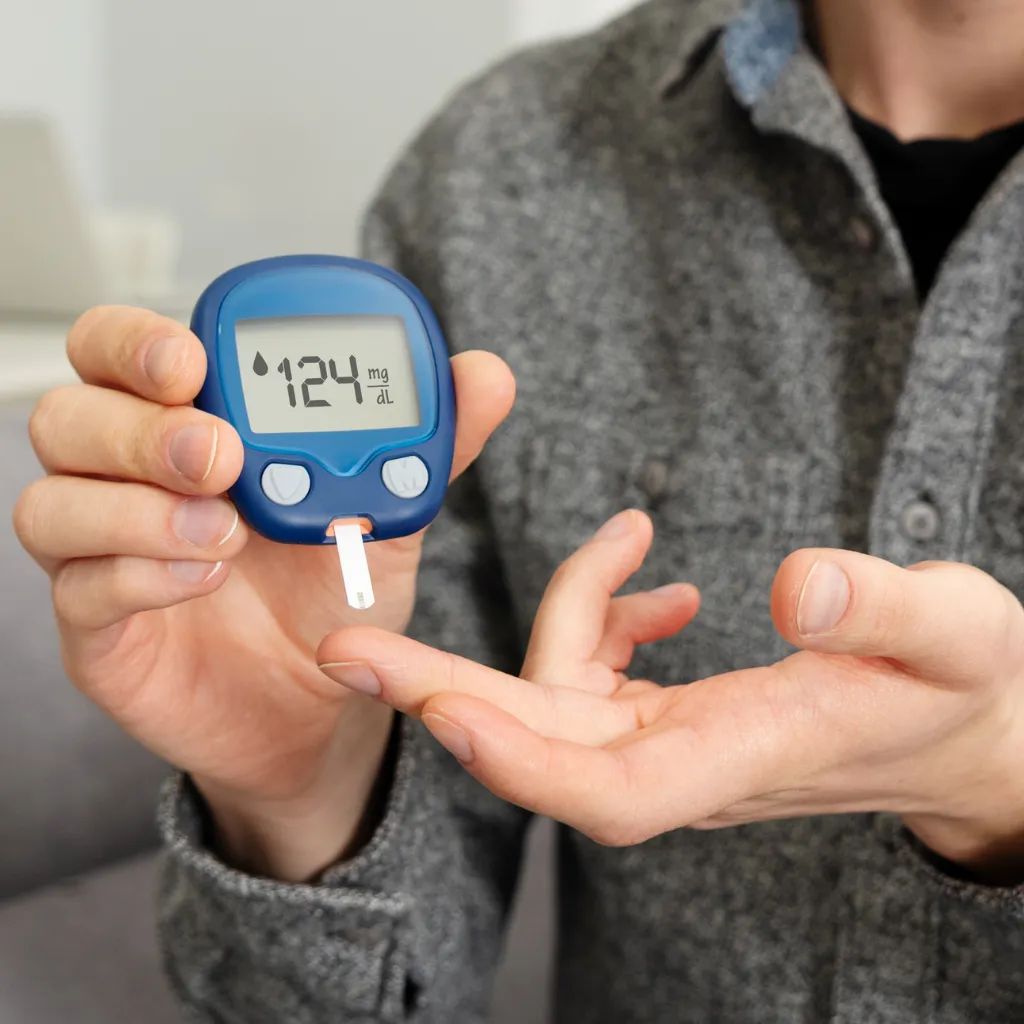
Blood sugar levels

Energy production

Inflammation
Immune function

Your sleep–wake cycle
In a healthy rhythm, cortisol rises in the morning to help you wake up and gradually declines throughout the day so your body can wind down at night.
When Cortisol Gets Out of Sync
The challenge isn’t cortisol itself—it’s when cortisol stays elevated for too long or starts showing up at the wrong times.
This is where things start to shift in a way you can feel:
You wake up tired even after sleeping
You feel wired at night but can’t fully relax
You crave sugar, salt, or caffeine just to keep going
You notice more weight around your midsection
You feel like your body just isn’t responding anymore
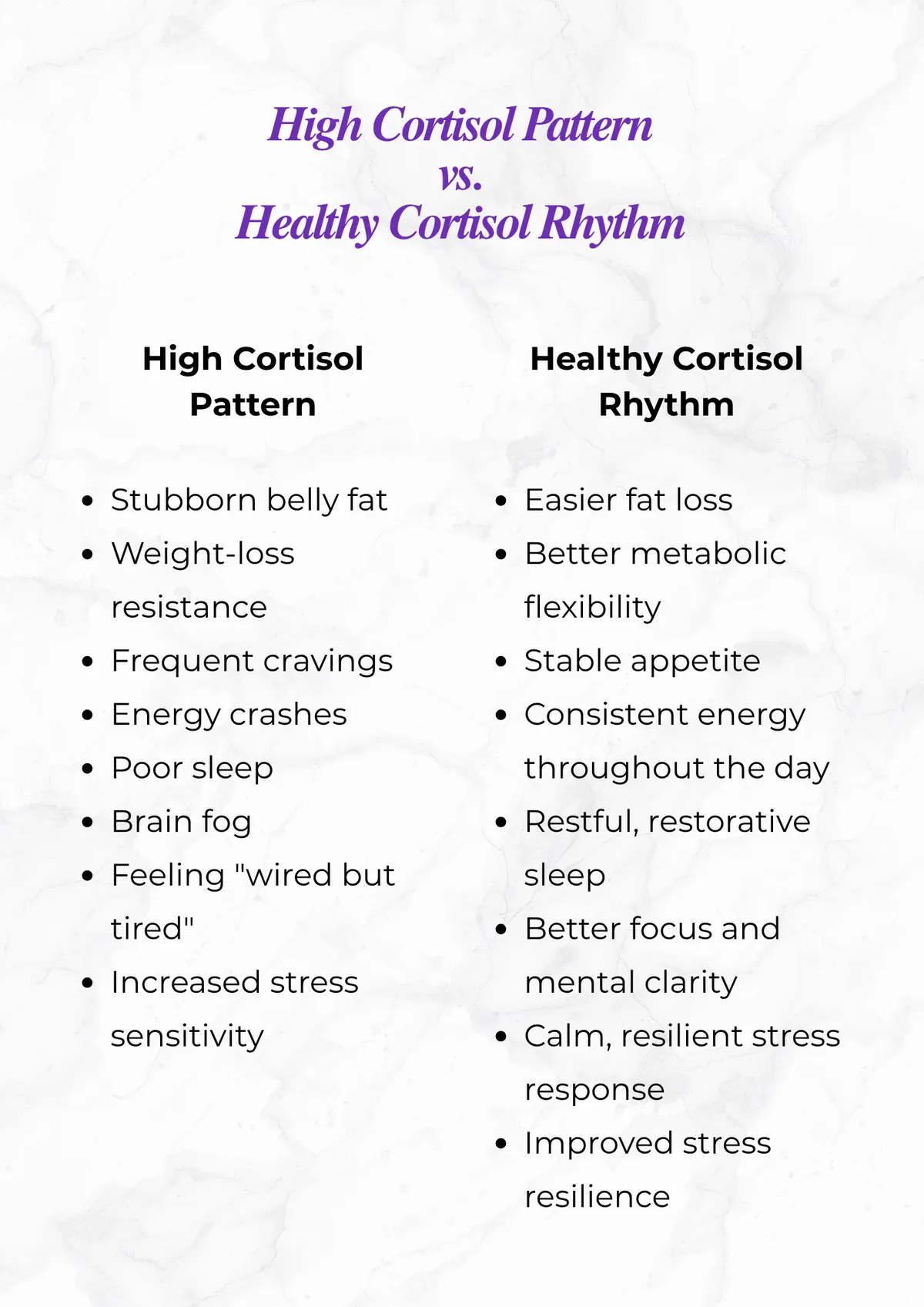
High Cortisol vs. Healthy Cortisol Rhythm
High Cortisol Pattern
Stubborn belly fat
Weight-loss resistance
Frequent cravings
Energy crashes
Poor sleep
Brain fog
Feeling "wired but tired"
Increased stress sensitivity
Healthy Cortisol Rhythm
Easier fat loss
Better metabolic flexibility
Stable appetite
Consistent energy throughout the day
Restful, restorative sleep
Better focus and mental clarity
Calm, resilient stress response
Improved stress resilience
How to Lower Cortisol Naturally
If any of those signs sound familiar, you're not alone.
The good news is that small, consistent changes can help support healthier cortisol patterns and create an environment where your body can function more efficiently. You don't need to overhaul your entire life overnight.
Start Here Today To Lower Your Cortisol
Choose just ONE today and add more at your pace:
☐ Get 10 minutes of morning sunlight
☐ Take a 10-minute walk after lunch
☐ Delay caffeine until after 8 a.m.
☐ Turn off screens 1 hour before bed
☐ Try 5 minutes of deep breathing
Small changes done consistently create big results.
That's exactly why I created The Cortisol Reset Blueprint: 8 Simple Shifts to Unlock Fat Loss—a practical guide filled with easy-to-implement strategies you can start using today.
Download the FREE Cortisol Reset Blueprint and discover 8 simple daily habits that can help support healthy cortisol levels, better energy, improved sleep, and a more fat-loss-friendly metabolism.
Does Cortisol Cause Belly Fat?
One of the most common questions people ask is whether cortisol causes belly fat.
While cortisol doesn't directly create fat cells, chronically elevated cortisol is associated with increased abdominal fat storage, particularly visceral fat around the organs.
This occurs because cortisol influences insulin, blood sugar regulation, appetite, and where the body preferentially stores energy.
This is one reason many people struggle with stubborn belly fat and weight-loss resistance even when they are eating well and exercising consistently.
Why Cortisol Makes Fat Loss So Difficult
When cortisol stays elevated, your body shifts into what is essentially a protective mode.
From a biological standpoint, stress signals potential danger. And in that state, your body’s priority is not fat loss—it’s survival.
That leads to a few key changes:
Increased fat storage, especially around the abdomen
Blood sugar instability, which drives cravings and energy crashes
Muscle breakdown, which slows metabolism
Reduced fat mobilization, even when you’re doing “everything right”
Research shows that chronic cortisol elevation is associated with increased visceral fat and metabolic dysfunction (Epel et al., 2000; Adam & Epel, 2007).
So when someone says, “I feel like my body is fighting me,” they’re not wrong.
The Cortisol–Energy–Fat Loss Connection
Cortisol doesn’t just affect fat storage. It also impacts how your body produces and uses energy.
When stress becomes chronic:
Mitochondrial function declines and energy tanks
Recovery slows down
Fatigue becomes persistent
This is why pushing harder—more workouts, more restriction—often backfires when cortisol is out of balance.
How This Connects to the Zerona VZ8 and Non-Invasive Fat Loss
If you've been searching for non-invasive fat loss, body contouring, or non-surgical fat reduction in Los Angeles, you've likely come across technologies designed to help reduce stubborn fat without surgery or downtime.
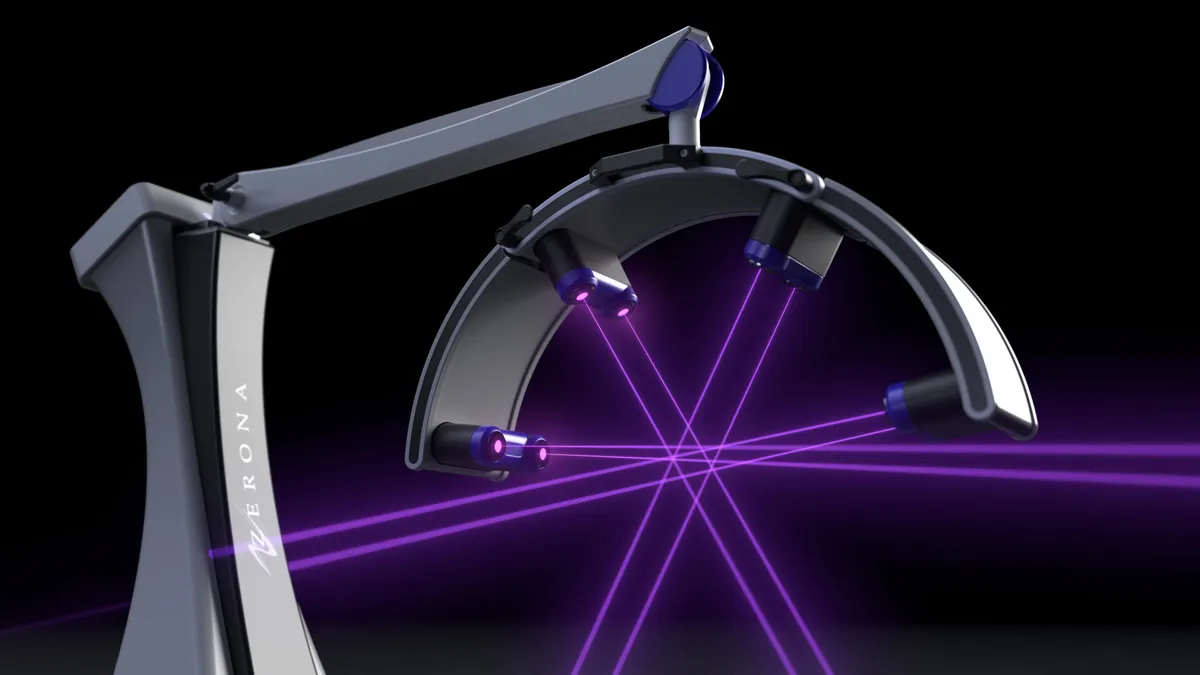
The Erchonia Zerona VZ8 is an advanced low-level laser technology designed to support non-invasive fat loss and body contouring.
The Zerona VZ8 is designed to help release fat from your fat cells, making it potentially available for your body to use as energy.
But here’s the part most people miss:
If your body is still in a high-stress, high-cortisol state, it may not efficiently use what’s being released.
Think of it this way: Zerona helps make stored fat available, but your metabolism, hormones, and nervous system determine what happens next.
Instead of burning that energy, or eliminating the fat, your system can re-store it.
That’s why at Sculpt Luxe LA, we don’t rely on the Zerona VZ8 technology alone.
We support:
Nervous system regulation
Hormonal balance
Energy production
Mindset (because your brain drives the whole system)
Looking for Non-Invasive Fat Loss or Body Contouring in Los Angeles?
If you've been searching for non-invasive fat loss, body contouring, or ways to reduce stubborn fat without surgery, you're not alone.
Many people struggle with weight-loss resistance despite eating well, exercising regularly, and doing all the "right" things.
In many cases, underlying factors such as cortisol imbalance, chronic stress, poor sleep, hormone dysfunction, and low energy production may be making fat loss more difficult than it needs to be.
That's why at Sculpt Luxe LA, we take a more comprehensive approach to fat loss.
We work with clients throughout Los Angeles who are looking for non-surgical body contouring, non-invasive fat loss, and solutions for stubborn fat that go beyond traditional dieting and exercise.
The Zerona VZ8 is an advanced, non-invasive fat-loss laser designed to help release fat from stubborn areas without needles, surgery, medications, or downtime.
But lasting results are about more than fat cells alone. Your metabolism, hormones, nervous system, sleep quality, and stress response all influence how efficiently your body can use and eliminate that released fat.
Whether your goal is reducing stubborn belly fat, improving body contouring results, overcoming weight-loss resistance, or supporting long-term metabolic health, understanding your cortisol patterns may be one of the most important first steps.
That's why we combine advanced technology with a deeper understanding of the factors that influence fat loss from the inside out.
Ready to Break Through Weight-Loss Resistance?
Apply Now to Schedule a complimentary Fat Loss Strategy Session to discover whether the Zerona VZ8 Elite Metabolic Fat Loss Program is right for your goals and learn how factors like cortisol, hormones, sleep, and stress may be affecting your results.
Struggling With Weight-Loss Resistance? Testing Can Provide Answers.
Symptoms can provide clues, but testing reveals the full story.
You can do all the right things, but if your cortisol rhythm is off, your results may feel inconsistent. If your body isn’t responding the way it should, guessing won’t fix it.
This is where testing changes everything.
Find out:
Whether your body keeps moving forward
Or slips back into old patterns
Sculpt Luxe LA offers the DUTCH Adrenal Panel by Precision Analytical; this simple at home test uses dried urine samples to measure Urinary Cortisol, Cortisone, and Cortisol Metabolites; Creatinine, and DHEA-S
Discover whether cortisol, hormones, or metabolic dysfunction may be contributing to your symptoms.
Struggling With Weight-Loss Resistance?
Testing Can Provide Answers.
Symptoms can provide clues, but testing reveals the full story.
You can do all the right things, but if your cortisol rhythm is off, your results may feel inconsistent.
If your body isn’t responding the way it should, guessing won’t fix it.
This is where testing changes everything.
Find out:
If cortisol is too high or too low
your body’s adaptability to stress
Ready for Answers Instead of Guessing?
Schedule a free 15-minute consultation to determine whether the DUTCH Adrenal Panel can help uncover hidden cortisol imbalances, hormone dysfunction, or metabolic factors contributing to fatigue, cravings, stubborn belly fat, and weight-loss resistance.
Frequently Asked Questions
Can high cortisol really cause belly fat?
Yes. Research consistently shows that elevated cortisol is linked to increased abdominal fat storage due to its effects on insulin and fat metabolism.
How do I know if my cortisol is high or low?
Symptoms can give clues, but testing (like the DUTCH Adrenal Panel) is the most accurate way to understand your cortisol pattern.
What is the best test for cortisol levels?
While blood testing measures cortisol at a single point in time, comprehensive testing such as the DUTCH Adrenal Panel can provide a more complete picture of cortisol patterns throughout the day, helping identify imbalances that may contribute to fatigue, stress intolerance, hormone symptoms, and weight-loss resistance.
Does stress affect fat loss even if I eat well?
Absolutely. You can have perfect nutrition, but if your body perceives stress, it can override fat loss signals.
Why am I not losing weight even with diet and exercise?
Many people experiencing weight-loss resistance assume they need to eat less or exercise more. However, factors such as cortisol imbalance, poor sleep, blood sugar dysregulation, hormone imbalances, and chronic stress can make fat loss more difficult despite healthy habits.
Why am I gaining weight around my stomach?
There are many factors that can contribute to weight gain around the midsection, including poor sleep, chronic stress, hormone imbalances, insulin resistance, and elevated cortisol levels. Cortisol has been associated with increased abdominal fat storage, particularly visceral fat, which is the deeper fat surrounding the organs. If you're noticing stubborn belly fat despite healthy habits, it may be worth looking beyond calories and exercise alone.
Why can't I lose belly fat?
Belly fat can be particularly resistant to traditional weight-loss approaches.
Factors such as chronic stress, elevated cortisol, poor sleep, blood sugar imbalances, hormonal changes, and reduced metabolic flexibility can all make it more difficult to lose abdominal fat.
Addressing these underlying factors may help support more successful and sustainable fat loss.
Can stress cause weight gain even if I eat healthy?
Yes. Chronic stress can influence fat loss and weight management even when nutrition is on point. Elevated cortisol levels may increase cravings, disrupt blood sugar balance, impair sleep, and encourage fat storage—especially around the abdomen. This is one reason some people experience weight-loss resistance despite eating well and exercising regularly.
What causes weight-loss resistance?
Weight-loss resistance occurs when the body is not responding to healthy diet and exercise efforts as expected. Common contributors include cortisol imbalance, hormone dysfunction, poor sleep, chronic inflammation, insulin resistance, nutrient deficiencies, certain medications, and metabolic adaptations. Identifying and addressing the underlying cause is often the key to breaking through a plateau.
How does sleep affect cortisol?
Poor sleep raises cortisol levels and disrupts its natural rhythm, which can lead to cravings, stress eating, fatigue, and weight gain.
What is non-invasive fat loss?
Non-invasive fat loss refers to treatments designed to help reduce stubborn fat without surgery, needles, anesthesia, or downtime.
Technologies such as low-level laser therapy, including the Zerona VZ8, are designed to support fat-loss goals while allowing individuals to continue their normal daily activities.
Non-invasive fat-loss treatments are often used as part of a comprehensive approach that includes healthy nutrition, movement, and lifestyle support.
How does body contouring work?
Body contouring is designed to help improve body shape by targeting areas of stubborn fat that may be resistant to diet and exercise.
Depending on the technology used, body contouring may help reduce fat, improve measurements, and enhance overall body composition.
At Sculpt Luxe LA, we focus on a whole-body approach that addresses factors such as metabolism, hormones, stress, and lifestyle habits in addition to advanced body-contouring technologies.
Can Zerona VZ8 still work if my hormones are off?
It can still stimulate fat release, but results are significantly better when your body is hormonally balanced and able to use that released energy.
Apply Now to learn which Zerona VZ8 Metabolic Fat Loss Program is for you.
References
Epel, E. S., et al. (2000). Stress and body fat distribution. Psychosomatic Medicine
Adam, T. C., & Epel, E. S. (2007). Stress, eating and the reward system. Physiology & Behavior
Stalder, T., et al. (2025). The Cortisol Awakening Response. Endocrine Reviews
McEwen, B. S. (2004). Protective and damaging effects of stress mediators
About the Author
Dr. Christine Anderson, DC, DICCP, FABCDD, DiHom, is the founder of Sculpt Luxe LA and has helped clients address stubborn fat, weight-loss resistance, hormone imbalances, and metabolic health challenges through advanced non-invasive fat-loss technologies, functional testing, and lifestyle strategies.
She specializes in helping clients uncover the underlying factors that may be preventing them from achieving their health and body-composition goals.
COPYRIGHT
© Dr. Christine Anderson, DC. All rights reserved.
This material is protected by copyright law and may not be reproduced, distributed, transmitted, or used in any form without prior written permission from Dr. Christine Anderson, DC.
Sculpt Luxe LA
(323) 927 - 6028
Los Angeles, CA
Luxury, science-based metabolic support for women ready to release stubborn fat intelligently and sustainably.
Luxury, science-based metabolic support for women ready to release stubborn fat intelligently and sustainably.
The Zerona VZ8 is FDA-cleared for reduction of body circumference. Results vary. This program is not intended to diagnose, treat, cure, or prevent any disease. Always consult your healthcare provider.
Navigation
Disclaimer:
The information in this article is provided for educational and informational purposes only and is not intended to diagnose, treat, cure or prevent any disease or medical condition.
Nutrition information is general information and is not a substitute for individualized medical advice.
If you have a thyroid condition, metabolic condition, diabetes, take medication, are pregnant or breastfeeding, or have other medical concerns, speak with your qualified healthcare professional before making significant dietary or lifestyle changes.
Individual results vary.
Zerona VZ8 is an aesthetic body-contouring device and is not a prescription weight-loss medication or a substitute for medical care, nutrition, physical activity or medically supervised weight management.
Copyright:
This recipe and original article content may not be reproduced, republished, copied or distributed without written permission from Sculpt Luxe LA.
© 2026 Sculpt Luxe LA. All rights reserved. · Designed with care.